

Contextual Pre-interaction Personalisation for Robots
Robot-to-Human interaction is fully personalised and context aware from the first seconds
We give embodied AI personalised prompts so it delivers the "WOW" through wording and approaches that matter to each user. Privacy-minded by design.
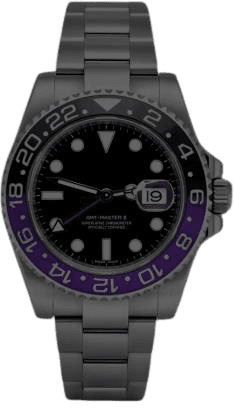
Robot-to-Human interaction is personalised and context aware from the first seconds
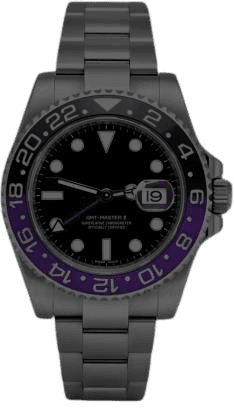
We give embodied AI personalised prompts so it delivers the "WOW" through wording and approaches that matter to each user. Privacy-minded by design.
We blend empathy and technology
Applications
Home companion robots
We help adapt wording, pacing and communication style before any live interaction starts. Our tech uses non-invasive visual signal analysis to create tailored behavioural prompts for each user, designing a better first impression and smoother adoption before communication begins.
AR/VR luxury training
We enable AR/VR training systems to create customer scenarios and teach employees to read people better. Our tech creates expectation profiles for each simulated customer, allowing employees to practise adapting their approach to different people for personalised luxury experiences.
Care facility robots
We reduce the adaptation burden by giving robots tailored instructions on how to approach each person, with wording that appeals and makes communication warmer and truly personalised on top of standardised approaches, so residents feel seen in highly routine environments.
Interaction becomes personalised
before communication starts
Frequently Asked Questions
H1NTED is a behavioural personalisation layer for AI agents and specific-purpose or general-purpose humanoid robots. It helps AI systems adapt how they communicate and behave based on visual signals users send to the world and build behavioural context (prompts) for any interaction.
Instead of treating every person in the same way, H1NTED is designed to help AI systems understand individual preferences, such as whether to use or not use certain wording and approaches across more than one hundred life scenarios that people could encounter every day, and adjust their interactions accordingly.
For example, after onboarding, a home robot may interact differently with two members of the same household because each person has different communication preferences and patterns. The robot knows these preferences before it starts communicating, so it puts its users at the centre of any communication and delivers a good first impression in any communication context by talking to the user like a good friend. It naturally becomes an extension of any household, delivering a seamless but unconsciously noticeable perfect user experience.
Learn more about our behaviour prompt: https://h1nted.com/gallery
If allowed by the user during the onboarding stage or during daily operations, H1NTED analyses visual signals first, such as the whole appearance or individual accessories that the robot's user wears, and converts them into behavioural prompts that an AI agent or robot can use to adapt its communication.
The prompts define how the AI should communicate with a specific person, including pacing, emotional distance in context, wording, boundaries, or preferred approaches. See prompt examples here: https://h1nted.com/gallery
The system uses a probability-tree architecture to evaluate different possible behaviours and select the most appropriate response for the specific user and context. This allows the AI to adapt its behaviour rather than relying on the same generic communication style for everyone.
It is not history-based personalisation. It is pre-communication personalisation that allows a personalised approach before communication history is there. But it is designed to complement history-based personalisation for better accuracy and an improved user experience.
Unlike the standard Human → LLM → response approach, the result of using H1NTED's personalisation layer is an AI agent or robot that can communicate in a more natural, consistent, and personalised way from the beginning of the interaction, following this flow: human → behavioural signals → H1NTED → behavioural instructions → AI/robot → response.
H1NTED can be used wherever AI agents or robots need to communicate with different people in a more personalised way. Current areas of interest include humanoid and home companion robots, healthcare and care-facility robotics, AI agents, AR/VR training and controlled R&D environments.
We are also open to exploring applications in security, defence and other controlled environments, where personalised behavioural instructions could help AI systems and robots adapt their communication to specific people and situations.
The technology is designed as a B2B integration layer, allowing organisations to explore and integrate pre-communication personalisation into their existing AI or robotic systems.
Yes. H1NTED can personalise communication for multiple individuals within the same household, provided each user has given the required permission and the necessary input is available in accordance with applicable legal and ethical requirements.
H1NTED does not perform user onboarding or obtain permission. The robot manufacturer, operator or other responsible organisation handles onboarding and ensures that the user has provided the appropriate consent or permission to use H1NTED.
Once permission and the required input are provided, H1NTED personalises each individual separately. It does not produce one generic result for everyone in the household. Each person can receive a different behavioural context and personalised instructions based on the signals available for that individual.
People naturally share similarities, but everyone is different. The way people expect to be approached, spoken to and treated can vary significantly depending on the person and the context. H1NTED is designed to capture these differences and help the same robot adapt its communication to the individual in front of it.
The result is a multi-user robot that can communicate with different people in different ways, rather than treating the entire household as one user.
H1NTED uses non-invasive visual signal analysis. It does not analyse faces, facial expressions, emotions or identity, and there is no facial recognition or need to look at a person's face. It also does not analyse tattoos or other identifying features.
H1NTED focuses on clothing and accessories as visual signals. These can include shirts, T-shirts, blouses, sweaters, hoodies, jackets, coats, blazers, suits, trousers, jeans, shorts, skirts, dresses, shoes, boots, trainers, sandals, belts, watches, bracelets, rings, necklaces, earrings, sunglasses, glasses, hats, caps, scarves, gloves, bags, backpacks, handbags, ties, bow ties and socks. It can also interpret clothing patterns, colours, fabrics, materials, textures, logos and other visible design elements.
H1NTED does not simply look at one item and assign it a fixed meaning. Its proprietary methodology combines multiple visual factors in context and applies probability-based reasoning to generate behavioural context and give an AI agent or robot an indication of how it may be better to approach, speak and behave with that individual.
The methodology has been developed through years of research across different disciplines, supported by relevant studies, research and accumulated knowledge. The purpose is not simply to describe what someone is wearing, but to translate visual signals into practical behavioural instructions for AI agents and robots.
Importantly, H1NTED does not assume that the same visual signal means the same thing for everyone. Different combinations of signals and context can produce different behavioural outputs, allowing the technology to create a more individualised approach.
H1NTED is designed with a privacy-minded, non-invasive approach and does not require facial recognition, biometric identification or analysis of identifying features. Where personal data is involved, its use must be subject to the appropriate permissions, legal basis, safeguards and requirements applicable to the specific deployment.
Yes. H1NTED is being developed as a B2B integration layer that can work with existing AI agents and robotic systems through API integration. Companies do not need to replace or rebuild their existing AI system. H1NTED can add a behavioural personalisation layer on top of technologies they already use.
H1NTED provides behavioural contexts and personalised instructions, while the existing AI agent or robot remains responsible for generating final communication and behaviour. This allows companies to upgrade existing AI and robotic systems with pre-communication personalisation, helping them move from a generic starting point to a more individualised interaction before communication history exists.
Pre-communication personalisation means adapting an AI agent or robot to a specific user before communication starts, rather than waiting for systems to build a history of interactions with that person.
H1NTED uses behavioural signals to create a behavioural context (prompt) that gives the AI instructions on how to communicate with users.
This means the AI does not have to start from a generic communication style when meeting a user for the first time. It already has a personalised behavioural approach that can be used from the beginning of any interaction, with hundreds of life scenarios kept as context.
Pre-communication personalisation is not intended to replace history-based personalisation. It is an entry point to deliver a good first impression and make communication warm and personalised, as such communication with a good friend in a robot's flash.
It is designed to complement history-based personalisation and put the user at the centre of any interaction, just opposite to what generic personalisation does, by giving AI systems a highly personalised starting point and allowing them to become even more accurate as communication history becomes available.
Behavioural personalisation in AI means adapting how an AI agent or robot communicates and behaves based on individual user preferences, rather than using the same communication approach for everyone.
H1NTED takes behavioural personalisation a step further by creating this behavioural context before communication starts. This allows an AI agent or robot to begin an interaction with a highly personalised behavioural approach instead of starting from a generic one.
The goal is to put users at the centre of any HRI (human-to-robot interaction) and make communication feel natural, consistent and personalised, so robots get adopted more smoothly, with higher satisfaction and a better user experience.
Personalisation can happen at different points, depending on the technology being used.
History-based personalisation happens after communication has already started. AI systems learn from previous conversations, behaviour, feedback and stored user information. This can become very useful over time, but the system has to interact with a person first before it knows how that person prefers to be approached.
Cloud and cookie-based personalisation can happen before a new interaction when information has already been collected from previous online activity, accounts, devices or services. This is common in digital products, where known users can receive personalised content or recommendations based on existing data. However, it depends on information already being available about that person and is not the same as understanding how a robot should communicate with them face-to-face.
User-provided personalisation happens when a person directly tells a system about their preferences, for example during onboarding, through settings, questionnaires or instructions. This can provide useful information, but it requires the person to describe what they want the system to know.
H1NTED introduces pre-communication personalisation through visual signals. With the user's permission, H1NTED can analyse permitted visual signals, such as appearance and accessories, before communication starts. It uses these signals with its proprietary methodology and probability analysis to create behavioural context and personalised instructions for the AI agent or robot.
This means H1NTED does not need to wait for communication history to build an initial behavioural approach. It can establish context before the first interaction, creating instructions around areas such as communication style, wording, pacing, boundaries and preferred approaches.
These different forms of personalisation are not mutually exclusive. H1NTED is designed to complement history-based personalisation, cloud-based data and other sources of context. The difference is when and how the personalisation enters the interaction:
History-based personalisation learns from what happened before.
User-provided personalisation learns from what the user tells the system.
Cloud and cookie-based personalisation uses existing digital data.
H1NTED provides over 100 behavioural contexts before communication starts.
The purpose is not to replace these approaches, but to give AI agents and robots a personalised behavioural starting point before they have a communication history with the person.
H1NTED personalises how an AI agent or robot communicates and behaves with a specific person. This can include how it approaches the person, wording, tone, pacing, communication style, boundaries and what to avoid across 100+ life and interaction contexts.
It personalises the starting point of any interaction, helping eliminate the cold-start problem by giving robots behavioural context before communication history exists. Different people can receive different personalised approaches, even when they interact with the same robot.
It does not personalise what robots know about people. It personalises how the robots interact with them from the beginning.
Yes. H1NTED creates personalised behavioural instructions that can define how a robot should approach, speak and behave with a specific person. Using one image of clothing or accessories, with no face or identity data, our proprietary technology interprets the visual signals in context and generates a behavioural prompt in around 10 seconds.
The prompt can cover tone, wording, pacing, communication style, boundaries, preferred approaches and what to avoid, across 100+ behavioural contexts and life scenarios.
This means that when different people are in the same room, the robot does not have to communicate with everyone in exactly the same way. Each person can receive a different behavioural approach based on their individual context and preferences. That is what makes H1NTED different: it moves the robot from a generic approach to a more individualised interaction before communication history exists, helping create a better first impression and a more natural human–robot interaction.
Yes and no. H1NTED can provide behavioural context that allows AI agents and robots to adapt their communication and behaviour during interactions, but it all depends on the robot's systems and capabilities. We are not responsible for deployment instructions given to robots.
Our initial personalisation is created before communication starts, solving the cold-start problem. Real-time behavioural adjustment can then help robots respond to changes in a person's context during interaction, based on the initial personalisation and behavioural life-context information we provide.
The cold-start problem happens when an AI agent or robot has little or no interaction history with a person, so it does not yet know their preferences or how to personalise its communication and behaviour.
As a result, the robot starts with a generic approach and needs time and repeated interactions to learn how to communicate with that individual.
This matters because the first interaction happens before the robot has had a chance to learn.
H1NTED addresses the cold-start problem by providing a personalised behavioural starting point before interaction history exists, helping robots approach, speak and behave more appropriately from the beginning.
Yes. AI can learn a person's preferences through previous interactions, feedback, and other available user data. However, this usually requires communication history to build an understanding of individuals or information provided from an external source.
H1NTED takes a different approach by creating behavioural context before communication starts. By using visual signals, H1NTED can provide an AI agent or robot with personalised behavioural instructions before communication starts (pre-communication personalisation).
It won't guess whether users want tea or coffee this morning, but it will adapt at a deeper level, knowing exactly how users want other people to talk to them and automatically expecting robots to behave and communicate in a similar way.
Of course, different people want different approaches and have different expectations, and robots can be adapted to each individual in a direct context, especially in environments such as healthcare or households, where legislative requirements may be less strict and user expectations for personalisation and natural communication might be higher year by year as HRI develops.
Behavioural prompts are structured instructions that tell an AI agent or robot how to communicate and behave with a specific person, rather than simply what information to provide.
A H1NTED behavioural prompt can define the person's behavioural profile, communication preferences, desired attitude, language to use, language to avoid, boundaries and how the AI should respond in different situations.
For example, one H1NTED prompt describes a person as having a tough, edgy and resilient presence with an underlying tender side. It then turns that understanding into practical instructions: recognise their strength, use a firm and assertive communication style, allow room for softness, use certain language and avoid wording that would feel weak, timid or overly gentle.
The prompt also defines how the AI should behave when the situation changes. In an emotional conversation, for example, it should respect the person's strength, offer practical options, listen to their lead and avoid pushing vulnerability too quickly. If the person becomes irritated or overwhelmed, the AI should adjust its approach while remaining consistent with the behavioural context.
This is what makes a H1NTED behavioural prompt different from a simple personality description. It translates who the person appears to be and how they prefer to be approached into actionable behavioural instructions that an AI agent or robot can follow.
H1NTED can create these behavioural prompts from permitted visual signals and use them as a personalised behavioural layer before communication starts. The result is an AI system that does not have to begin with the same generic approach for everyone.
Yes. AI agents and robots can adapt their behaviour and communication to different users by using information about individual users, their preferences and the context of HRI.
For H1NTED, an important difference is when that adaptation happens: H1NTED is designed to provide a personalised behavioural starting point before communication begins, rather than relying only on information learned through previous interactions.
This is specifically important in environments where several people interact with the same robot, such as a household. The same communication with all family members will create a feeling of generic communication (like talking to a wall), which reduces user experience and automatically impacts business results and, in the long run, users' mental health.
See more about mental health impact in our articles: https://www.linkedin.com/pulse/early-home-humanoid-robots-may-increase-mental-health-lynnyk--lpg7f/
However, when adapting to different users, AI also has to stay legal and ethical. That limitation creates more uncertainty and requires a complex approach from AI development, personalisation development and legislative work.
See more about how communication limitations or communication freedom in home humanoid robots can impact families, not individuals: https://www.linkedin.com/pulse/how-home-humanoid-robots-hold-our-family-secrets-alexander-lynnyk--ymqof/
AI memory allows an AI agent or robot to remember information about a user from previous interactions and use that information to personalise future communication. This means systems need interaction history to build an understanding of users and their preferences.
H1NTED takes a different approach. It provides pre-communication personalisation, creating behavioural context before communication starts. Instead of waiting for the AI to learn how a person wants to be treated through previous conversations, H1NTED can provide behavioural instructions before any HRI starts.
This does not mean H1NTED replaces AI memory. It complements it by providing an opportunity to open a conversation warmly, with words and approaches that a robot user would expect from human-to-human communication, and could be very surprised by the high quality of personalisation from robots. The two approaches can work together: H1NTED provides an initial personalised behavioural approach to deliver a perfect first impression right after initial onboarding, while AI memory can continue learning from interactions and improve personalisation over time.
The key difference is simple: AI memory learns from what happened before. H1NTED provides a personalised behavioural starting point before it happens, learning from who people really are and why they expect certain things, by paying close attention and putting people at the absolute centre of any communication so it flows naturally and friendly all the time.
No. H1NTED is designed to complement AI memory, not replace it. AI memory learns from previous interactions, while H1NTED provides a personalised behavioural starting point before interaction history exists.
The two can work together. H1NTED provides an initial behavioural context during onboarding, helping robots start with a more personalised approach. AI memory can then continue learning from interactions, preferences and feedback over time.
This creates a simple progression: H1NTED gives robots a better starting point → AI memory continues learning → personalisation becomes deeper over time.
No. H1NTED is not designed to identify people, recognise faces or perform biometric identification. Its current technology focuses on permitted visual signals such as clothing, appearance and accessories to create behavioural context for personalised communication.
We work with controlled environments and customers where the required permissions, legal basis and documentation are established before images are processed. The exact way images are processed depends on specific deployment, customer requirements and applicable legislation.
Biometric data is personal data created through specific technical processing of physical, physiological or behavioural characteristics that allows or confirms the unique identification of a person. Examples include facial recognition templates or fingerprint data used for identification.
H1NTED does not need to establish who a person is. Its purpose is to understand visual signals and generate instructions about how an AI agent or robot should approach, speak and behave with that person.
There is an important distinction, however: an image or information about a person's appearance can still potentially be personal data, depending on context and whether that person can be identified. Therefore, H1NTED is designed around permission-based and privacy-minded use, with the exact implementation depending on the application, jurisdiction and applicable legal and ethical requirements.
In simple terms: H1NTED personalises how a robot communicates with someone without needing to identify who that person is.
H1NTED does not treat legal and ethical requirements as something to check only after the technology has been developed. We continuously consider how legislation, ethical standards and expectations around AI and robotics are developing, and design the technology with those changes in mind.
Different environments require different levels of control. A home robot, healthcare robot, defence application or research system can involve very different risks, permissions and responsibilities. Our technology therefore needs to be developed and applied according to the specific context, with appropriate safeguards, user permission and legal requirements.
We also want to contribute to the development of ethical AI and robotics, rather than simply follow existing rules. As robots become more permanent parts of people's lives, new risks will emerge that may not yet be fully addressed by legislation. For example, a robot that becomes a permanent presence in a household raises questions around privacy, behavioural influence, family dynamics, personal information and long-term human–robot relationships.
H1NTED aims to identify these possibilities early, consider the risks and help shape how behavioural personalisation develops responsibly. The goal is not simply to make robots more personalised, but to help develop personalised human–robot interaction that remains responsible as the technology and its use cases evolve.
No. H1NTED is not designed to identify people, recognise faces or use biometric identification. Its purpose is to interpret permitted visual signals, such as appearance and accessories, and use them to create context for personalised communication.
H1NTED is designed with privacy and responsible development in mind. We aim to minimise the information required, avoid unnecessary sensitive data and operate only within the permissions, legal requirements and safeguards appropriate to each application.
This distinction is important because personalisation does not require knowing who someone is. H1NTED is focused on understanding signals that can help an AI agent or robot decide how to approach a person, rather than establishing their identity.
At the same time, we recognise that visual analysis and behavioural personalisation can create legal and ethical risks depending on how the technology is deployed. Data protection, profiling, discrimination, biometric regulation, transparency, consent, automated decision-making and sector-specific requirements may all become relevant in different contexts. The EU AI Act, for example, places specific restrictions and requirements around biometric systems, profiling and certain forms of emotion recognition.
For this reason, H1NTED does not treat privacy and compliance as a one-time checklist. We continuously consider how legislation, regulation and ethical expectations are developing and aim to build safeguards into the technology as it evolves.
H1NTED's goal is not to identify people. It is to help AI agents and robots understand how to communicate with them while keeping privacy, human rights, safety and responsible development at the centre.
H1NTED is designed to minimise retention of behavioural information. The behavioural context generated for an interaction is not intended to be stored by H1NTED as a long-term user profile.
For our current research and development work, we do not store generated behavioural results for longer than necessary for the research purpose. Where results need to be retained for research, testing or validation, they are kept only for that specific purpose and subject to the applicable permissions and safeguards.
The principle is simple: H1NTED generates behavioural context to enable personalisation, not to build a permanent database of people's behavioural profiles.
This approach is also consistent with the GDPR principles of data minimisation, purpose limitation and storage limitation, which require personal data to be limited to what is necessary and not retained longer than necessary for the purpose.
For commercial deployments, the exact retention, processing and deletion arrangements would be defined according to the customer deployment, permissions, legal requirements and agreed data-processing arrangements.
Robots are entering homes, healthcare and other human-centred environments where they will interact with different people, but current AI personalisation largely starts after communication has already begun. That creates a gap: the robot has no personalised understanding of the person in front of it when the first interaction happens, even though humans naturally adjust their approach before saying a word.
This matters because the first interaction can shape trust, satisfaction, adoption and the long-term relationship between a person and a robot. For manufacturers and operators, poor communication can become a business problem through lower acceptance, frustration and abandonment. In homes and care environments, where robots may become part of everyday life, repeated communication failures can also affect psychological wellbeing, companionship and mental health, particularly for more vulnerable users.
H1NTED addresses this gap with pre-communication personalisation: creating behavioural context before interaction starts so a robot can approach different people in a more appropriate and personalised way from the beginning. It is designed to work alongside AI memory, which can continue learning from interactions over time.
We believe this represents a new layer in human–robot interaction and an early opportunity to establish pre-communication personalisation as robots move into homes and other human-centred environments. The same technology can be developed for healthcare, hospitality, training, security, defence, border robotics and other future HRI applications, depending on the context, permissions and regulatory requirements. H1NTED is focused on building this niche early, while the robotics market is still developing.
Yes. Personalisation can influence how people perceive, accept and choose to continue using robots. Research in HRI suggests that adapting a robot's communication and behaviour to individual users can improve aspects of the interaction such as sociability, perceived usefulness, trust and engagement, although the effect depends on the context and other factors such as usability, privacy and the robot's actual value to the user.
This is particularly important for robots entering homes, healthcare and other environments where the same robot may interact with different people. A generic communication style may not suit everyone, while personalised behaviour can make the interaction feel more relevant and appropriate to the individual.
H1NTED addresses a specific part of this problem: the first interaction. Instead of waiting for a robot to build a history with someone, H1NTED provides a personalised behavioural starting point before communication history exists. Using permitted visual signals, it creates behavioural context that can guide how the robot approaches, speaks and behaves with that person across 100+ life and interaction scenarios.
The goal is not to claim that personalisation automatically guarantees adoption. The goal is to remove one barrier at the beginning of any relationship between a person and a robot and give the robot a more individualised starting point from the first interaction.
H1NTED gives robots a better starting point; the quality of ongoing interaction can then determine whether that relationship develops over time.
Because the robot's first interaction with a person happens before it has had time to learn anything about them.
Most personalised AI systems improve through interaction history. They observe, remember and learn over time. But a robot entering a home, healthcare environment or other human-centred space may meet a person for the first time with no meaningful behavioural context, forcing it to start with a generic approach.
That creates the cold-start problem: the robot may be highly intelligent, but it does not yet know how that particular person expects to be approached or communicated with.
H1NTED addresses this gap by providing a personalised behavioural starting point before communication begins. With permission, it interprets visual signals and creates behavioural context across 100+ life and interaction scenarios, giving the robot instructions on how to approach, speak and behave with that individual.
This means the robot does not have to spend its first interactions discovering that every person is different. It can start with the person at the centre of the interaction from the first seconds.
H1NTED does not replace AI memory. It gives the robot a better start, while memory can continue personalising the relationship over time.
The future is not just AI that learns from what happened. It is AI that can start with relevant context before something happens.
Yes. H1NTED is designed specifically to make human–robot interaction more personalised from the very beginning.
Today, a robot can have an extremely capable AI behind it and still approach every new person using essentially the same generic behavioural starting point. H1NTED changes that starting point.
Before the first interaction, H1NTED can interpret permitted visual signals and create behavioural context across 100+ life and interaction scenarios. This gives the robot personalised instructions about how to approach, speak and behave with that specific person, including communication style, wording, pacing, boundaries, preferred approaches and what to avoid.
This matters because HRI is not only about whether a robot can produce the correct answer. It is also about how the robot behaves while interacting with the person. Research has shown that factors such as warmth, competence, adaptation and personalisation can influence how people perceive and trust robots.
H1NTED brings this personalisation to the beginning of the relationship, rather than waiting for the robot to build enough interaction history to understand the person.
The potential result is a robot that feels more aware of the person in front of it, more appropriate in its communication and more natural from the first interaction — rather than requiring the user to spend weeks teaching the robot how they want to be treated.
H1NTED does not make the robot smarter. It makes the robot start smarter about the person it is interacting with.
The future of human–robot interaction is likely to move from robots simply reacting to people toward robots understanding relevant context and preferences before and during interaction.
Today, much of robot personalisation is built through interaction: robots observe behaviour, receive feedback, build memory and gradually learn what a person prefers. Research is increasingly exploring proactive personalisation, preference prediction and robots that can anticipate user needs rather than waiting for every preference to be explicitly taught.
H1NTED is focused on an earlier point in this process: the moment before the first interaction.
Our vision is that robots should not meet every person with the same generic behavioural starting point. With permission, H1NTED can interpret visual signals and create behavioural context before interaction history exists, giving the robot personalised instructions on how to approach, speak and behave across 100+ life and interaction scenarios.
Over time, we see pre-communication intelligence becoming part of a broader personalisation stack:
Pre-communication context → first interaction → real-time adaptation → AI memory → continuous personalisation.
This could become increasingly important as robots move into homes, healthcare and other environments where one robot may interact with many different people. The robot should not have to spend its first weeks learning that every person is different.
Our vision is simple: robots should start understanding how to interact with a person before they start talking to them — and then keep learning as the relationship develops.
Because the first interaction is the moment when a person begins forming an impression of the robot. In HRI research, first encounters can influence perceptions of a robot's competence, personality, warmth, trustworthiness and willingness to interact with it again. Some research also suggests that impressions formed early in interaction can persist across later interactions.
This matters even more as robots move into homes, healthcare and other environments where people may interact with them repeatedly and where trust, comfort and acceptance are important. Research on HRI has identified trust and acceptance as fundamental factors in whether people are willing to use and continue interacting with robots.
The problem is that a robot can be extremely intelligent but still know nothing about how the person in front of it wants to be approached when that first interaction begins.
That is the gap H1NTED addresses.
With permission, H1NTED can interpret permitted visual signals and create a personalised behavioural context before the first interaction, giving the robot instructions on how to approach, speak and behave with that individual across 100+ life and interaction scenarios.
Instead of:
New person → generic robot behaviour → robot learns over time
H1NTED enables:
New person → personalised behavioural context → personalised first interaction → ongoing learning
The objective is not to guarantee trust or adoption. It is to give the robot a far more personalised starting point, so the relationship begins with the person at the centre rather than with a generic communication approach.
The robot only gets one first interaction. H1NTED is designed to make that starting point count.
AI memory is extremely valuable for long-term personalisation. It allows robots and AI agents to remember previous conversations, preferences, feedback and experiences, and use that information to improve future interactions. Research in HRI has shown the value of memory for continuity and personalised long-term relationships.
The limitation is timing.
A new user has no interaction history. The robot has to start somewhere, and without another source of context it may begin with a generic behavioural approach. Recent research on personalised AI agents also identifies new users and the lack of prior interaction data as a challenge for history- and memory-based personalisation.
H1NTED addresses this cold-start gap. With permission, it can interpret permitted visual signals before communication starts and create behavioural context across 100+ life and interaction scenarios. This gives the robot a personalised behavioural starting point — including how to approach, speak, pace communication, set boundaries and what approaches to avoid.
The two technologies therefore work together rather than against each other:
H1NTED → personalised starting point → interaction → AI memory → deeper personalisation over time.
This can be particularly relevant for home companion robots, healthcare and care-facility robots, AI agents, hospitality and other human-facing systems, where the same technology may need to communicate appropriately with many different people.
The vision is simple: AI memory helps a robot remember who you are. H1NTED helps it know how to approach you before it has had the chance to learn.